Qalverunoxel
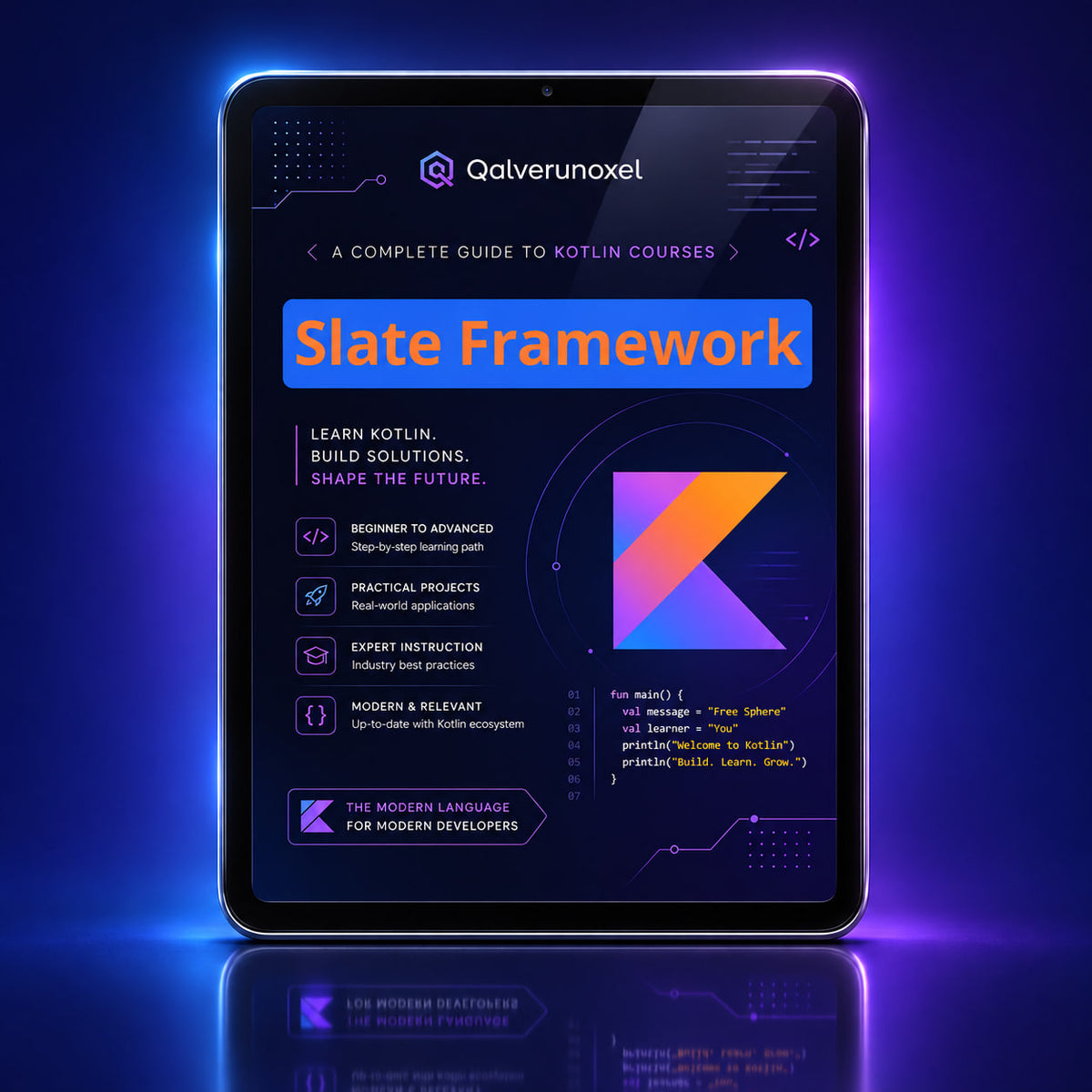
Slate Framework
Slate Framework
Couldn't load pickup availability
1. Problem Statement
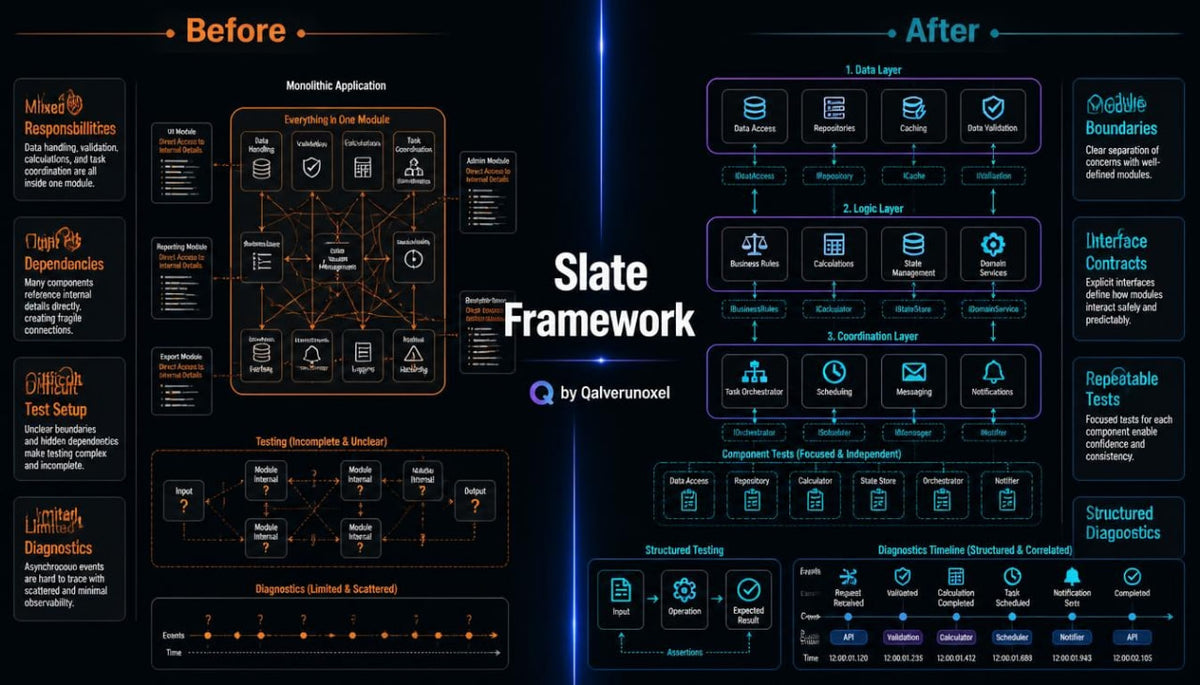
Larger programs often contain functions whose responsibilities overlap. Changes in one component may unexpectedly affect another. Code that relies on tightly connected objects can be difficult to test independently. Concurrent operations add further complexity when outcomes depend on execution order. Without explicit component boundaries and verification activities, understanding program behavior can require extensive manual investigation.
2. Solution
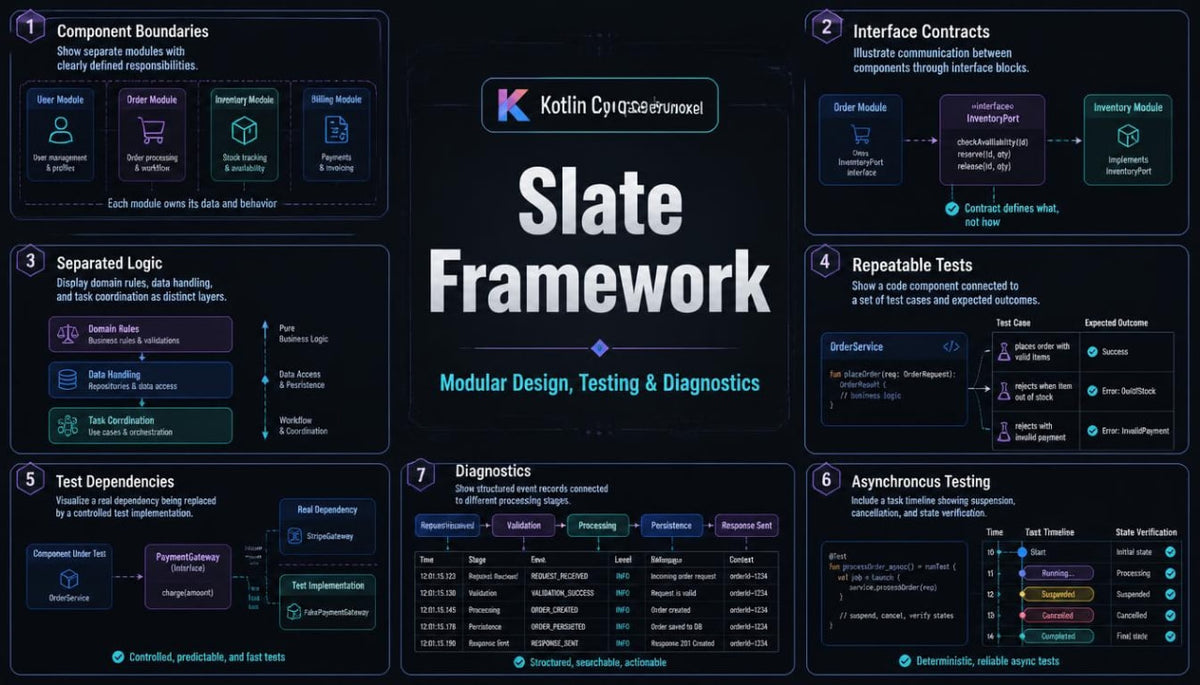
Slate Framework introduces methods for organizing components around defined responsibilities. Learners examine interfaces, dependency boundaries, and the movement of data between program layers. Guided tasks demonstrate how to write focused tests for ordinary and exceptional conditions. Asynchronous examples illustrate testing cancellation and state updates. A final workshop brings these ideas together in a modular Kotlin program with documented checks.
3. What's Inside
Module 1 — Mapping Program Responsibilities
Identify distinct tasks within a codebase. Group related operations into components and describe the information exchanged between them.
Module 2 — Defining Component Contracts
Use interfaces and data types to describe component behavior. Compare direct dependencies with boundaries that permit separate implementations.
Module 3 — Separating Logic From Coordination
Distinguish calculation rules from input handling and task coordination. Refactor a mixed routine into focused functions and classes.
Module 4 — Building Repeatable Tests
Write tests for function results, boundary inputs, and invalid values. Organize cases around observable behavior rather than implementation details.
Module 5 — Replacing External Dependencies in Tests
Create simple substitute implementations for data providers. Examine how controlled inputs make individual components practical to evaluate.
Module 6 — Checking Asynchronous Behavior
Test suspended operations, task cancellation, and state transitions. Trace when results appear and how failures affect related tasks.
Module 7 — Diagnostics and Error Records
Create structured error descriptions and diagnostic messages. Distinguish information useful for investigation from details unrelated to the observed issue.
Module 8 — Modular Application Workshop
Assemble a small task registry with separate data, rule, and coordination components. Add tests, review dependencies, and document remaining limitations.
4. Who Is This For?
Slate Framework is intended for learners already familiar with Kotlin classes, interfaces, collections, error handling, and coroutines. It suits readers who want to study modular organization and verification through concrete coding tasks.
5. What You'll Learn
-
Divide program responsibilities into distinct components.
-
Define interfaces for interaction between modules.
-
Separate domain rules from coordination logic.
-
Write tests for expected and exceptional outcomes.
-
Use substitute implementations for isolated testing.
-
Examine cancellation and state changes in asynchronous tests.
-
Record errors with relevant diagnostic context.
-
Review module dependencies and document design decisions.
6. Guarantee
We offer a 30-day money-back guarantee on all paid digital courses and educational materials available through our store.
If you are not satisfied with your purchase, you may request a full refund within 30 calendar days of the original purchase date.
As our courses are delivered digitally, there is no need to return any physical items. Receiving, downloading, or opening the course materials does not affect your eligibility for a refund under this policy.
Refunds will be issued to the original payment method. Processing times may vary depending on your bank or payment provider.
How are Qalverunoxel courses organized?
How are Qalverunoxel courses organized?
Our Kotlin courses are organized around individual programming topics and structured learning modules. Each course includes written explanations, code examples, and practical activities that encourage independent exploration of the material.
Do I need previous programming knowledge?
Do I need previous programming knowledge?
The recommended starting point depends on the selected course. Introductory materials explain foundational concepts, while later courses examine more detailed programming structures. Each course description outlines its intended audience and learning topics.
What format do the educational materials follow?
What format do the educational materials follow?
Our courses are delivered digitally and contain written educational materials, structured modules, programming examples, and practical exercises. The content is arranged for independent reading, review, and study.
Share